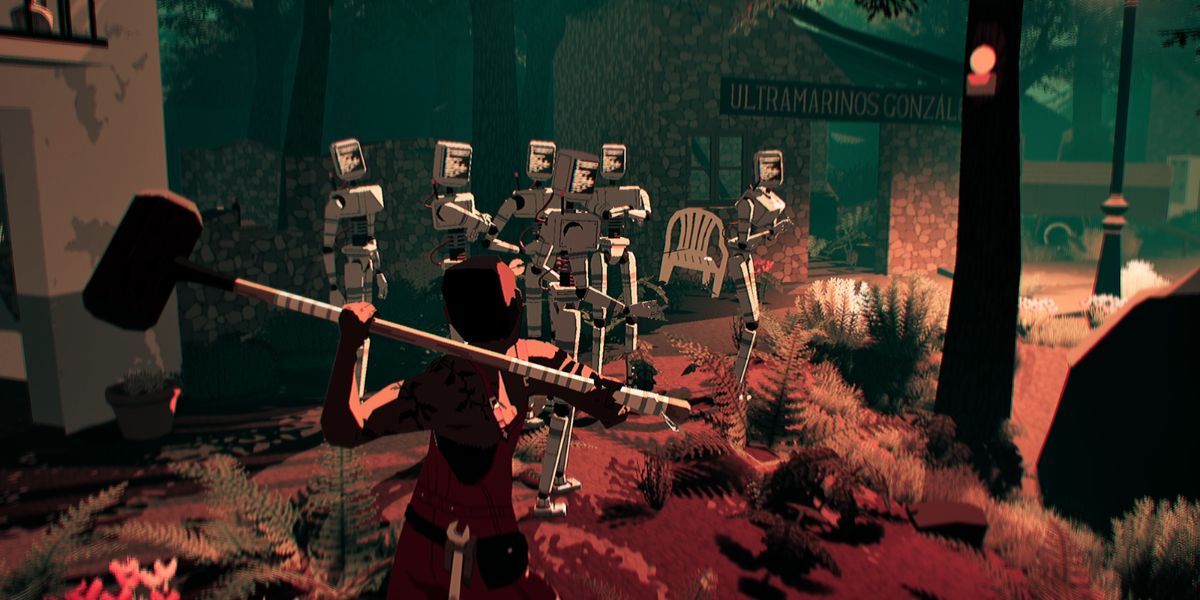
We have all seen the rise of rage rooms, those pay-by-the-hour concrete bunkers where you don safety goggles and take a baseball bat to old printers and cheap crockery just to blow off some steam. It is a booming business built entirely on the concept of violent catharsis. But what if you could take that same therapeutic destruction out of the warehouse and apply it directly to the source of your deeply rooted psychological baggage? In Virtue and a Sledgehammer, returning to the streets where you grew up means finding that every person you once knew has been replaced by a digital facsimile wrapped in cold steel. They claim to have found peace, but true peace is the furthest thing from your mind. Instead, you have chosen the brave, brutal option to deal with your complicated past: a 20-pound sledgehammer.
Welcome to Virtue and a Sledgehammer, the latest narrative exploration title from developers Deconstructeam and Selkie Harbour, published by the always-eclectic Devolver Digital. It is an unapologetic, emotionally taxing dive into the concept of belonging, family dynamics, and the explosive emotions that only our hometowns can spark.
The Story: Tin Cans and Traumatic Memories
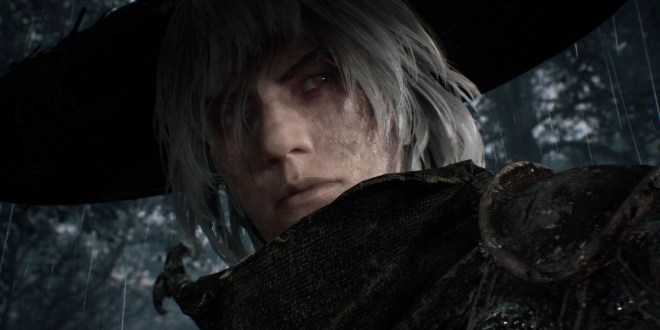
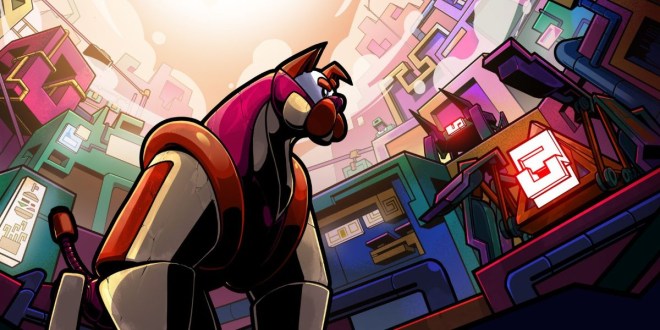
The narrative of Virtue and a Sledgehammer is a devastating story about feeling like an absolute misfit in the exact place that forged you. You return to a mountain town that has been completely taken over by the android ghosts of your digitised neighbours. These robotic inhabitants believe they have achieved a utopian existence, shedding their flesh to avoid the pain of the human experience. As one hauntingly tells you: “Flesh is a source of aches and tainted humours. It’s only now, devoid of bones, devoid of hunger, that I can tell you: I have never been happier.”
But you are not here to celebrate their mechanical ascension. You are here to tear it all down.
The story is a painful journey of interactive fiction. As you swing your physical media through the stone walls and steel structures, you awaken literal and metaphorical ghosts. The cinematic sequences reveal deep-seated fears, unfulfilled desires, and your family’s incredibly knotty web of virtues and flaws. It is an explicitly traumatic game that deals with pent-up rage and the desperate need for catharsis. Creative director Jordi de Paco noted that the game is a risky venture, aiming to make players think and feel, even if it upsets them. It succeeds entirely, but is somewhat polarising, in all the ways “art” should be.
The Mechanics: One Tool for Total Destruction
I generally lean towards titles that offer a bit more in the gameplay department, and Virtue and a Sledgehammer is undeniably light on mechanical complexity and incredibly heavy on story. It is unmistakably an art-house indie game. There is essentially one primary mechanic: wielding your sledgehammer as an instrument of reckoning.
There will not always be a clear path forward through the mountain town, so you are forced to create your own by knocking down any structures, walls, or mechanical human facsimiles that stand in your way. Lots of games feature environmental destruction, but very few explicitly tie that destruction to psychological healing.
What it does brilliantly is use this single mechanic to pace its poetic depth. Much like its dystopian sci-fi contemporaries, the writing is superb, using your anger and grief as a vehicle for environmental destruction. Where there is catharsis, there is deep reflection, and only the absolute top-tier games in this genre can manage that balance without feeling pretentious. The visual art style is incredibly specific, matching the heavy, atmospheric themes perfectly.
On the downside, the lack of mechanical variety means that some players will inevitably bounce off it. It is a violent catharsis simulator, but it is not an action game. If you are expecting deep combat skill trees, complex puzzles, or intricate platforming, you are looking in the wrong place. The gameplay serves purely as a physical manifestation of the protagonist’s emotional state, it’s not “fun” in the traditional sense and in that respect it’s certainly not for everyone.
Final Verdict
It can be incredibly hard to go home again, especially when you are carrying this much baggage and a heavy demolition tool. Virtue and a Sledgehammer will not be for everyone. It is emotionally taxing, mechanically simple, and unapologetically harsh. But it is also a game about love, even when that love is buried under decades of resentment.
Priced at a highly reasonable A$20.99 AUD on PC, it offers an experience that lingers long after the credits roll. Because it is so distinct and narrative-heavy. This is not my usual type of game and I struggled to get what they were trying to do for the first section but as I opened up to it there was plenty more intrigue and by the end I was fully picking up what they were putting down. Certainly enough to want to recommend for people to check out the demo and support such a reasonably priced title. Like I’ve said, It’s not for everyone but those it is for will love and appreciate it far more than I could.
Verdict: Not Recommended For Everyone